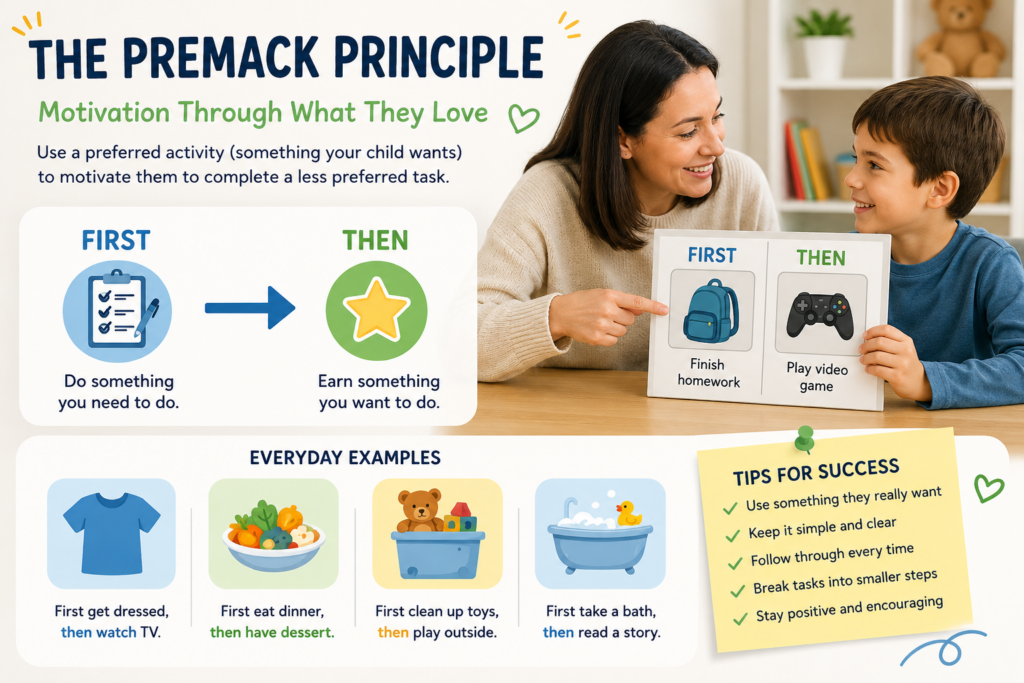
The Premack Principle means that a highly preferred activity is used as a reward for completing a less preferred activity.
It is often called the “First–Then” strategy because it uses a preferred activity to motivate a child to complete a less preferred task. It’s simple, effective, and can make daily routines much smoother.
How to use the Premack Principle:
-
- Identify a task your child doesn’t want to do.
-
- Pair it with a reward or preferred activity they truly want. The reward should be motivating to your child. What works one day may not work the next, so pay attention to what your child is excited about.
-
- Clearly state the expectation – use clear language such as “First clean up, then snack” or “first shoes, then playground”. Avoid long explanations or negotiations
-
- Be consistent and follow through – If you promise the preferred activity after the task is completed, be sure to provide it. Consistency builds trust and helps your child understand the relationship between completing the task and earning the reward.
Remember to stay positive!
Present the “First–Then” statement calmly and confidently. Avoid using the preferred activity as a threat.
-
- For example, instead of: “No iPad until you clean”, try “First clean up your toys, then iPad time”.
Why Does the Premack Principle Work?
Children are naturally more motivated to complete tasks when they know something fun or meaningful comes afterward. The Premack Principle helps:
-
- Increase cooperation
-
- Reduce power struggles
-
- Build independence
-
- Teach delayed gratification
-
- Create predictable routines
Most importantly, it teaches children that completing responsibilities leads to positive outcomes.
Common mistakes when trying to use the Premack Principle:
-
- Letting the child have the preferred activity before completing the task.
-
- Choosing rewards that aren’t motivating.
-
- Giving in after saying “First–Then.”
-
- Using activities the child dislikes as the reward.
The Premack Principle isn’t about bribing children, it’s about teaching motivation, responsibility, and positive routines. Over time, many children begin completing everyday tasks with fewer reminders because they understand what comes next.
As children become more independent, you can gradually reduce how often you use rewards and replace them with natural consequences, praise, and the satisfaction of accomplishing tasks on their own.
At Advanced Behavioral Dimensions, LLC, we specialize in using strategies like this to help children with Autism build essential life skills. If you’d like more support, feel free to reach out. We’re here to help!
